




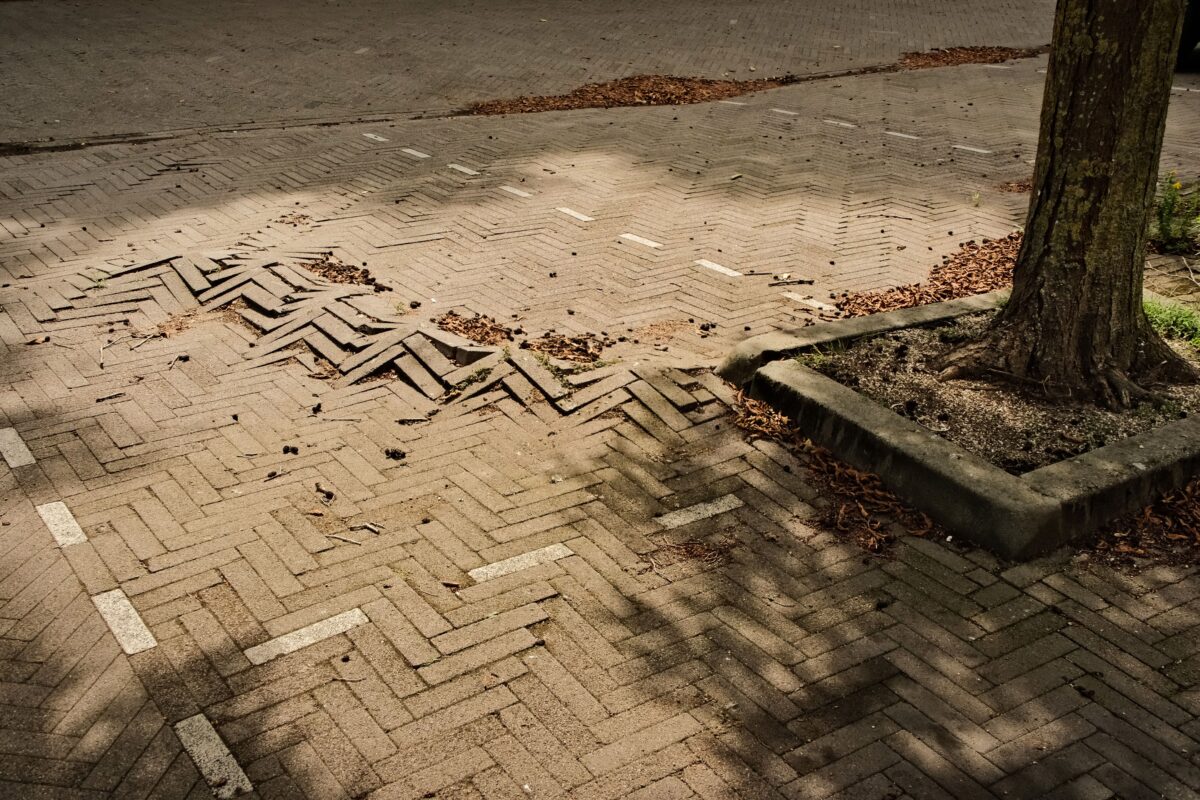
Trees in public spaces are under increasing pressure. They have to find room to grow in soil that is already crowded with cables, pipes and other infrastructure. Due to urbanisation, trees are increasingly forced to grow in environments that differ greatly from their natural conditions. At the same time, it is more important than ever for trees to grow old in good health, so that they can make a positive contribution to the climate. This combination results in three recurring problems for many municipalities in practice:
- Root heave or damage to infrastructure
- Poor growth due to an unsuitable tree pit
- Diseases and pests
Problem 1: root heave and damage to infrastructure
What goes wrong?
Tree roots actively search for oxygen, water and nutrients. They are opportunistic by nature and will always follow the path of least resistance. When there is insufficient rootable space underground or when the soil structure is poor, roots tend to spread along existing, more open structures. These include cable and pipe routes or the area directly beneath paving, where oxygen and moisture are more readily available. Common consequences include:
- Damage to paving caused by root heave
- Cable breaks and leakages
- Unstable trees
- High and recurring repair costs
- Safety and liability risks
Solution: root protection or root guidance
Root protection and root guidance are proven methods for preventing or reducing root-related problems such as root heave and damage to underground cables and pipes. They also help to avoid high repair costs and safety risks. Both are underground, virtually invisible solutions that work in a simple yet highly effective way.
What is the difference between root protection and root guidance?
|
Root protection |
Root guidance |
|
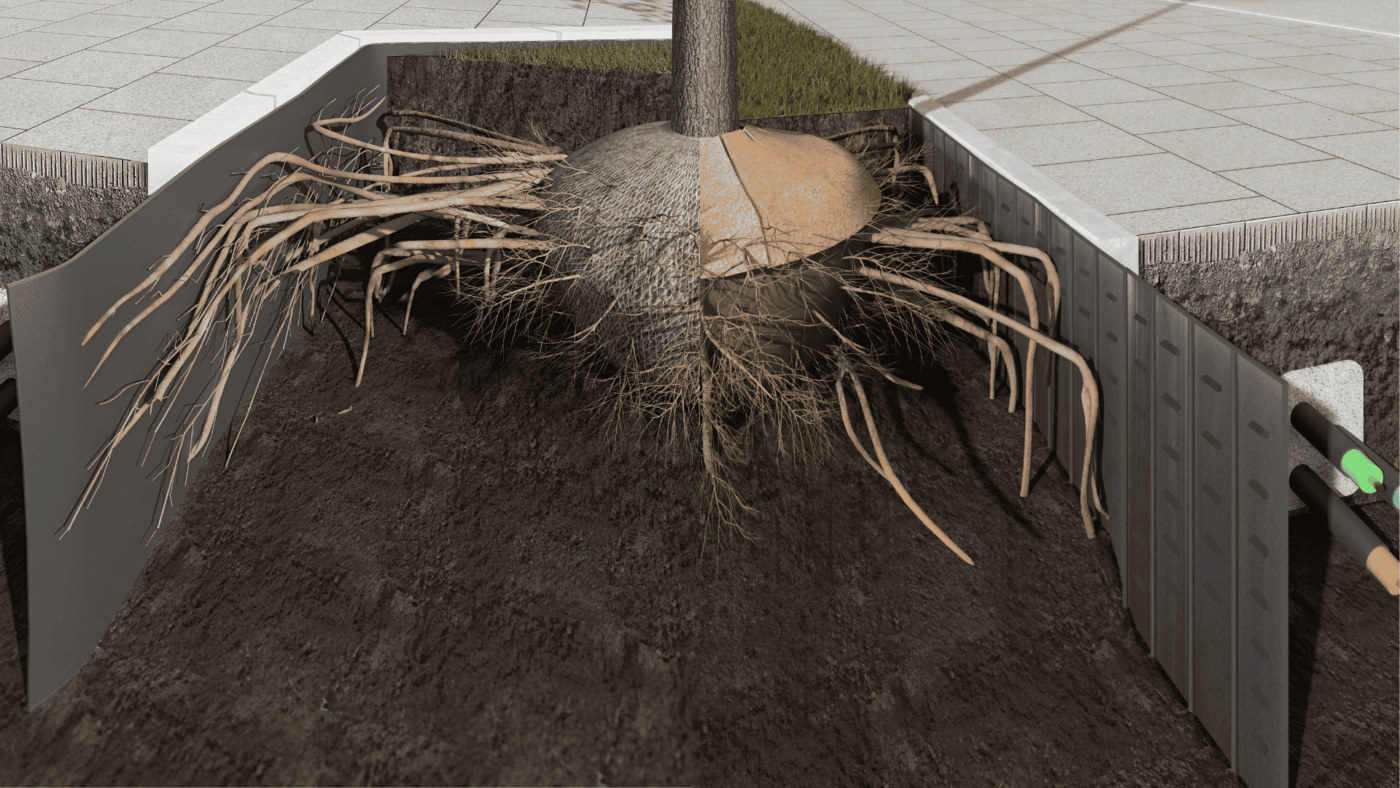
Root protection involves blocking tree roots with a barrier so that they cannot grow further in a specific direction. This is also called a ‘root protection barrier’. Once roots encounter the wall, they continue to grow along it at the same depth. If a protection wall is installed too close to the tree, the tree may be unable to stabilise properly, resulting in the so-called “flowerpot effect”. The general rule is therefore that a root protection wall should always be installed at a minimum distance of 2 metres from the tree. |
Root guidance directs roots downwards. As with root protection, the roots encounter a barrier, which in this case is called a root guidance panel. These panels are fitted with guiding ribs positioned perpendicular to the panel. The ribs ensure that roots are guided downwards when they hit the panel. Once the roots reach the bottom of the panel, they continue to grow horizontally. Because the roots can continue to grow freely beneath the panel, the tree is able to stabilise properly. Unlike root protection, root guidance can therefore be applied within 2 metres of the tree. |
Problem 2: poor growth due to an unsuitable tree pit
How can you recognise this problem?
Trees naturally belong in forests, not surrounded by concrete and paving. It is therefore not surprising that a tree shows signs of stress when it is planted in paved areas without a suitable tree pit. Urban trees often suffer from heat stress, soil compaction, lack of oxygen, insufficient rooting space, drought, pollution and nutrient deficiencies. Trees rarely fail immediately, but instead experience long-term stress. This can be recognised by:
- Limited crown development
- Premature leaf drop
- Minimal annual trunk diameter growth
- Reduced stability
- Increased susceptibility to diseases and pests
Solution: a soil cell system
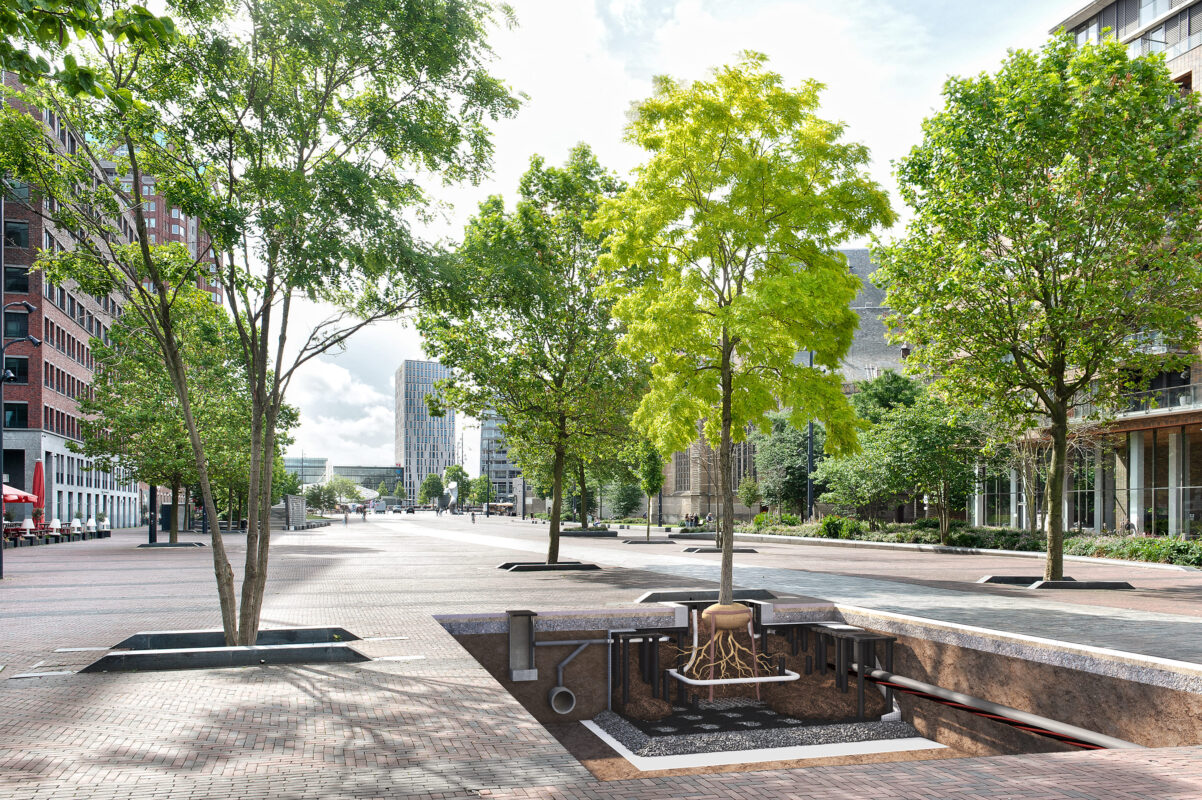
A structural solution is the use of a soil cell system. The TreeParker soil cell system is an underground construction that provides trees in paved areas with an optimal tree pit. The system is suitable for both new and existing trees. The structure supports heavy traffic loads, preventing soil compaction and allowing roots to develop freely within the soil cell system. The space is often filled with a specially designed tree substrate that is both water-permeable and nutrient-rich.
- Rootable volume (growing space)
- Oxygen supply via aeration pipes
- Water supply through infiltration and water buffering
- Stability through root ball anchoring (for new plantings)
- Controlled root growth using the Tree Root Guiding system
- Correct soil composition
- Load-bearing capacity for paving
- Accessibility for cables and pipes
Maintenance-friendly
The TreeParker system is designed so that:
- Trees and root growth remain manageable for decades
- Inspection, maintenance and targeted adjustments to the tree, system components or underground infrastructure are possible
- Interventions can be carried out without extensive damage to paving, roots or underground infrastructure
Problem 3: diseases and pests
Why are diseases and pests so common?
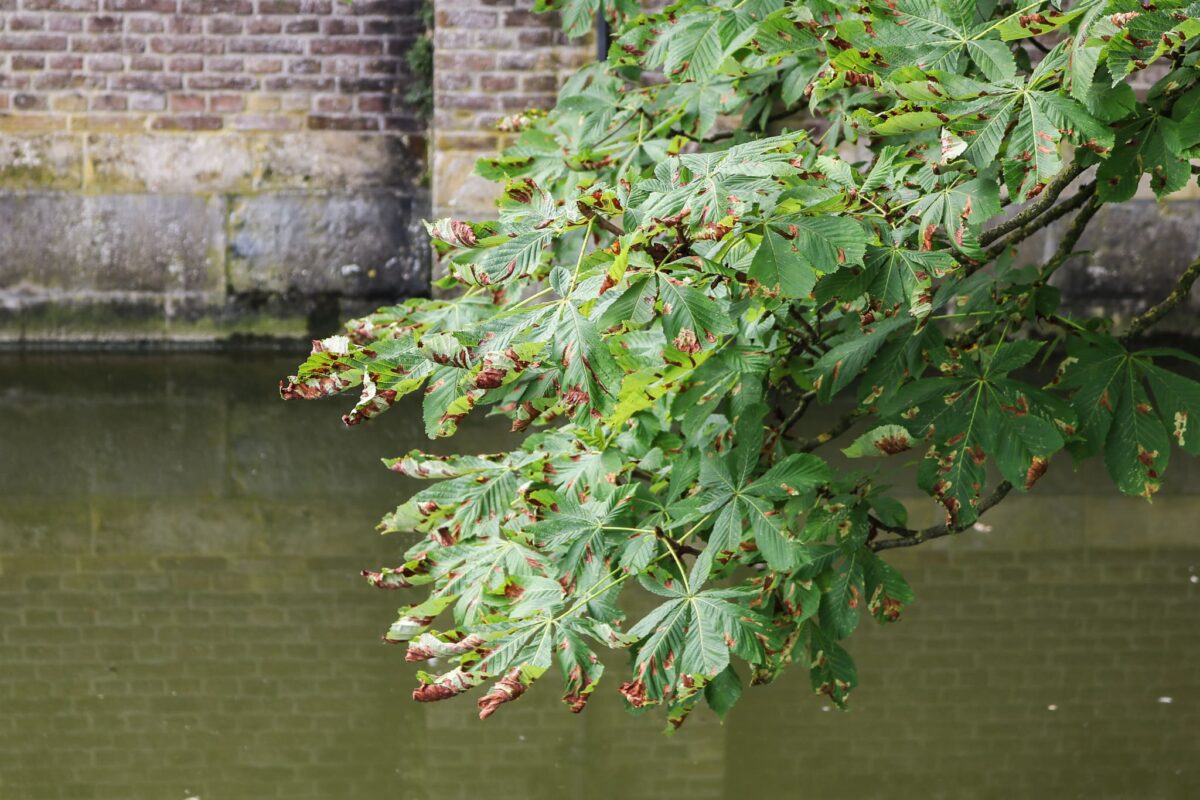
Diseases and pests are usually not isolated problems. They are often the result of long-term stress factors affecting trees, such as:
- Drought and/or heat stress
- Oxygen deficiency
- Soil compaction
- Nutrient deficiencies
A tree with a weak foundation is more vulnerable to infestations. This gives fungi, bacteria and insects greater opportunity to establish themselves and cause damage.
Solution: strengthening tree health
Addressing diseases and pests is essentially symptom control. In most cases, the tree was already weakened, allowing diseases and pests to take hold. While it is important to combat the symptoms, it is at least as important to address the tree’s health at its core. The approach consists of three steps:
- Step 1: First, investigate which stress factors the tree is suffering from. Is there drought, poor soil structure, a disrupted water balance, or a lack of oxygen? If you are not sure how to approach this, feel free to contact us at info@greenmax.eu. Send a photo of the tree or trees in question, describe the problem, and we will be happy to advise you.
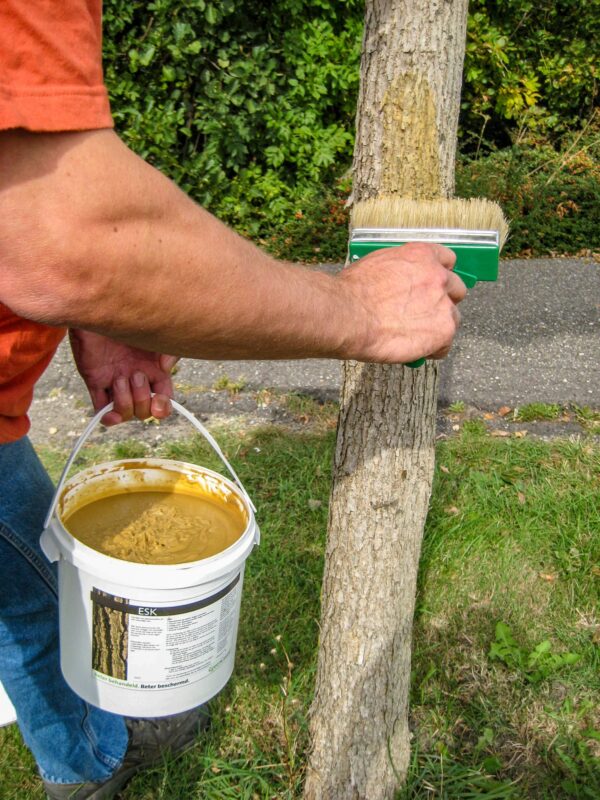
- Step 2: Treat the symptoms when infestations are already visible. For example, if oak bark beetle is present, apply ESK to the trees as soon as possible. If harmful fungi have been detected, apply Avengelus promptly. Or if the trees are suffering from heat stress and show signs of sunscald damage, do not hesitate to apply ArboFlex or other trunk protection.
- Step 3: After treatment, improve the tree pit for the tree or trees. In step 1 you identified which stress factors are affecting the tree. Based on that information, you can look for solutions that improve the tree pit so that the risk of diseases and pests in the future is reduced. The same applies here: if you need help finding the right solution for your specific problem, we are happy to help. Please do not hesitate to contact us.
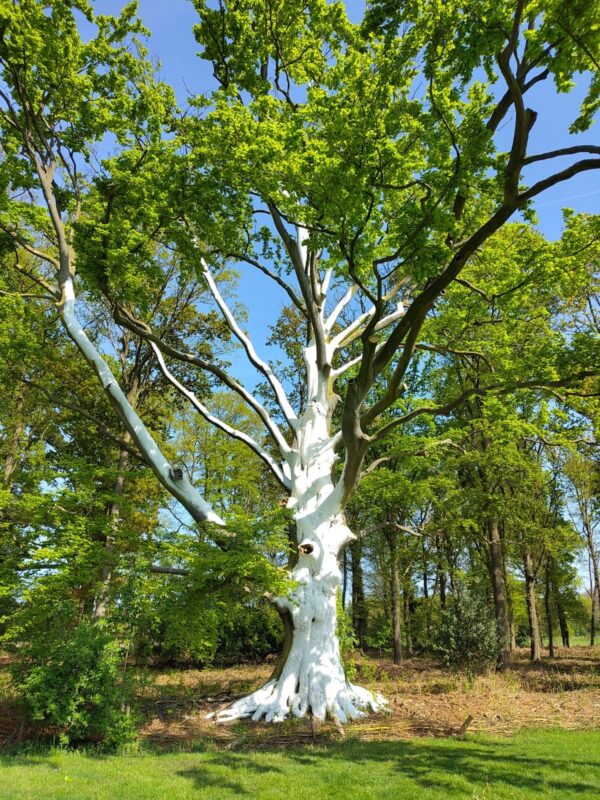
Overview: problems and solutions
|
Problem with trees in public spaces |
Consequences |
Structural solution |
|
Root heave or damage to infrastructure |
Root heave, cable breaks, safety risks, high repair costs |
Root protection (RootBlock / RootControl) or root guidance (Tree Root Guiding). Tip: consult the decision-making guide for selecting the appropriate solution. |
|
Poor growth due to an unsuitable tree pit |
Trees fail to grow old in good health and gradually decline |
TreeParker soil cell system, designed to replicate natural growing conditions for trees as closely as possible. |
|
Diseases and pests |
Infestations and an increased risk of tree failure |
The importance of an integrated design
The root cause of many problems with trees in public spaces often lies not in maintenance, but in design. Trees are frequently planted in soil that is already overcrowded with infrastructure. When different disciplines are involved too late, underground conflicts arise that could easily have been prevented. An integrated design leads to:
- Less damage and repair work
- Lower maintenance and management costs
- Healthier trees
- Predictable underground infrastructure
Summary
The three most common problems with municipal trees are root heave and damage to infrastructure, unsuitable tree pits and diseases and pests. Root heave and conflicts with cables, pipes and paving can be prevented by directing root growth from the planting stage using root protection or root guidance. Poor growth caused by unsuitable tree pits can be structurally resolved by creating sufficient rootable volume, for example with a soil cell system that integrates growing space, water storage and load-bearing capacity for paving. Diseases and pests are often the result of prolonged stress and should be addressed by structurally improving tree health, including reducing drought stress, heat stress and oxygen deficiency, and applying targeted measures where necessary.
By addressing these issues at their source rather than reacting only once damage becomes visible, minor problems can be prevented from developing into costly interventions. This creates public spaces in which trees can grow old in good health.