




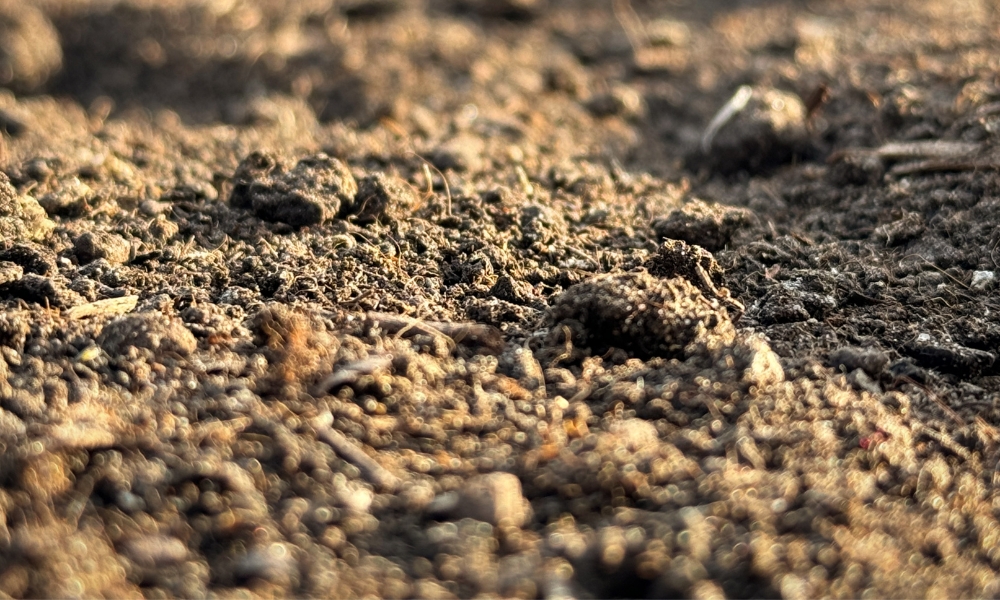
Sometimes a garden or park doesn’t have a major problem, it just needs a little help. The planting is in place, the greenery is being watered, and at first glance everything seems fine. Yet growth still lags behind. Grass struggles to establish, new plants take time, and the overall appearance isn’t as strong as you’d like.
Of course, you can try many things: watering more, fertilising again, waiting for spring to improve conditions. But often, the real solution isn’t above ground. It’s below the surface.
Healthy plants start with healthy soil
Beneath plants, trees and grass, more is happening than you might think. Bacteria, fungi, micro-organisms and tiny soil creatures live together in a complex network. When this soil life is active, plants can absorb nutrients more efficiently. The soil retains moisture better, and roots have more space to develop properly.
That’s exactly where worm compost, also known as vermicompost, comes in.
What makes worm compost so effective
GreenGuard Vermicompost is a natural soil improver based on humus and carefully composted plant material. It is not used as a quick fix, but rather as a steady, long-term improvement to the soil. In essence, you give the soil a nudge in the right direction.
The existing soil organisms help convert organic matter into nutrients that plants can absorb. This makes the soil more active, more open in structure, and better able to retain moisture.
Additionally, the vermicompost contains four types of worms and/or worm cocoons: three species of surface-dwelling worms and one deep-burrowing species. The surface-dwelling worms are mainly active in the top 30 to 40 centimetres of the soil, moving horizontally through this layer. The deep-burrowing worm works vertically, creating channels into deeper soil layers. This allows water to drain more easily, keeps the soil aerated, and gives roots more space to grow. As a result, worm compost not only stimulates soil life but also improves soil structure.
This is precisely why vermicompost can make a difference in areas where growth is underperforming, new planting needs extra support, or soil dries out quickly.
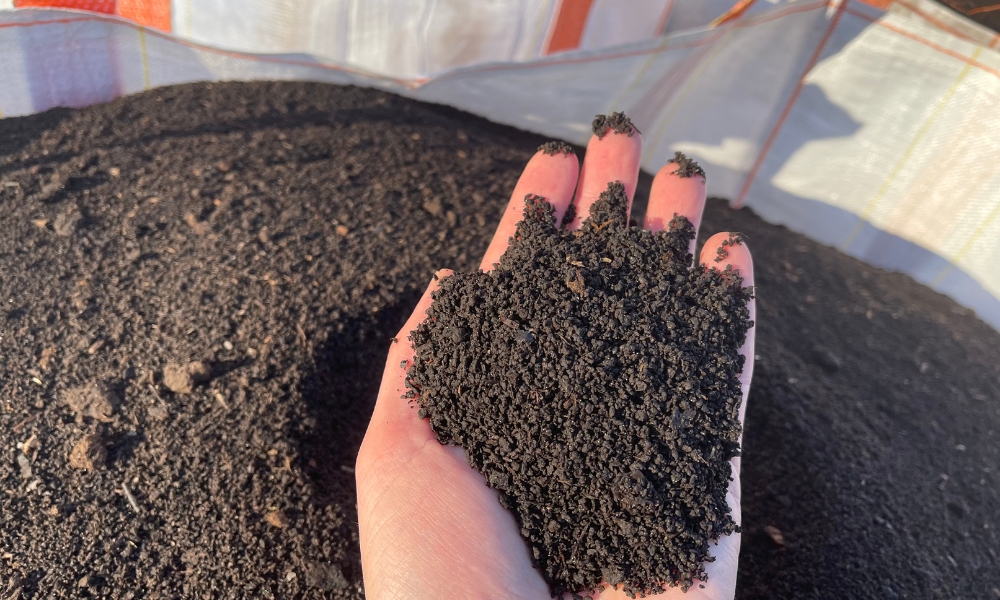
Ideal for challenging areas
Every outdoor space has one. A planting bed where plants don’t quite establish. A lawn that stays thin. Or an area that simply looks less healthy than the rest. That’s where worm compost can make a real difference.
Not because it gives plants a temporary boost, but because it improves the conditions in which they grow. The soil becomes more active, and roots can make better use of nutrients and moisture. This makes vermicompost valuable not only for private gardens, but also for landscapers, contractors, and larger planting projects where strong, sustainable growth is essential.
No expertise required
The good news: you don’t need specialist soil knowledge to use worm compost. For new planting, mix it into the planting hole. For existing borders, lightly work it into the top layer of soil. On lawns, spread a thin layer evenly. After that, the soil does most of the work. Because vermicompost works slowly and evenly, there’s no risk of overfeeding plants. In most cases, applying it once a year is sufficient.
Less effort, healthier growth
What makes worm compost so practical is that you can simply apply it during regular maintenance, when planting, maintaining borders, or improving weaker areas. From there, the soil takes over. Soil life becomes more active, moisture remains available for longer, and plants benefit from improved growing conditions, naturally and gradually.
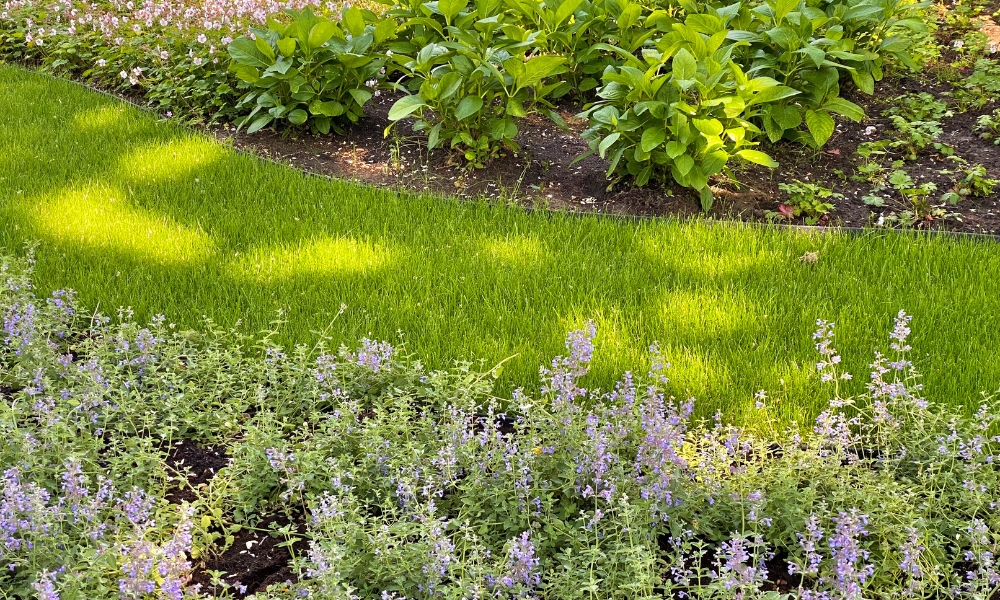
Green that thrives again
With worm compost, you give the soil that extra support. The soil becomes more active, plants grow more effectively, and moisture is retained for longer. It’s not a major intervention, but a small addition that makes a visible difference above ground.
Advice on soil improvement
At GreenMax, we develop innovative solutions for growing environments, from soil to canopy. We build on years of expertise and insights from national and international practice. With a broad perspective, we support landscapers, arborists and municipalities in improving soil conditions for public green spaces. Together, we look for practical solutions that genuinely help trees thrive. Feel free to schedule a no-obligation consultation. We’d be happy to assist.
Request a consultationSummary
Worm compost (vermicompost) is a natural soil improver that stimulates soil life and creates better growing conditions for plants, lawns and trees. Rather than acting as a quick fertiliser, it works gradually by activating micro-organisms, improving soil structure and retaining moisture. Thanks to the presence of different worm species, the soil becomes more aerated and easier for roots to penetrate. This makes worm compost particularly effective in areas where growth is limited or where new planting struggles to establish.
Last updated on: 29 June 2026
- Article expanded with additional explanation of the role of soil life in plant growth and moisture retention.
- Information broadened on how different worm species contribute to soil structure.
- Clarification added on the difference between vermicompost and traditional fertilisers.
- Practical applications for lawns, planting and new installations further specified.
- Extra emphasis placed on long-term effect and low-maintenance use.
- Additional guidance included on timing and dosage within regular green space management.
Published on: 29 June 2026