




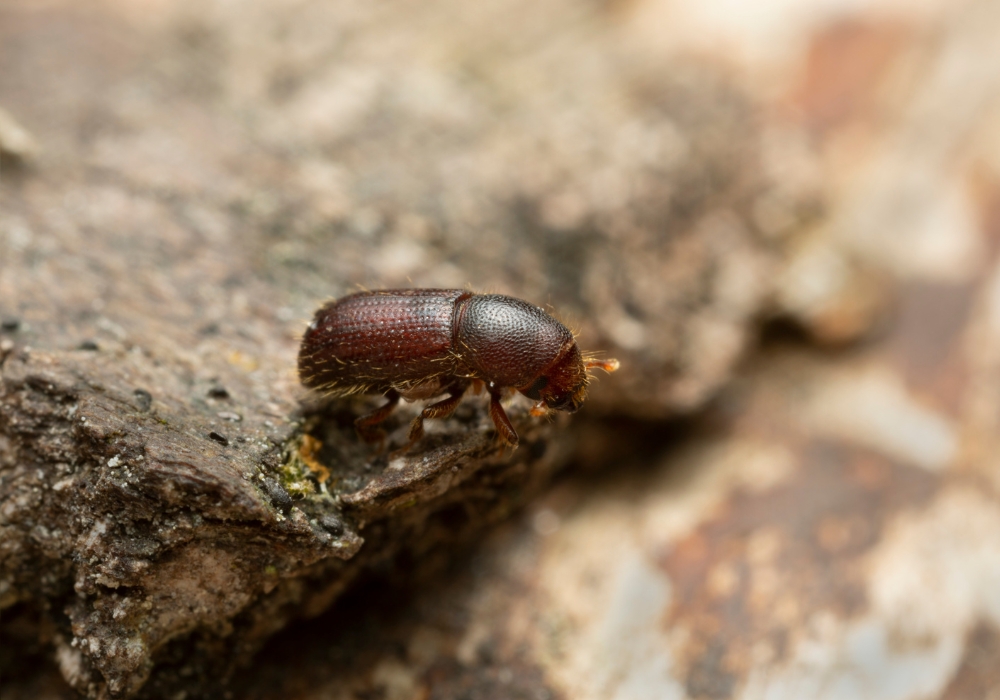
With young oaks, everything often seems well arranged after planting. The tree is in place, the growing site has been prepared, and the first watering has been done. Yet this is precisely when a vulnerable phase begins for the tree. Below ground, roots need to recover and start growing again. Above ground, the tree is immediately exposed to sun, wind, drought, and temperature fluctuations. Especially in the first period after planting or transplanting, an oak is more vulnerable than it may appear on the outside. It is precisely during this period that the oak bark beetle can strike. Although it is a small insect, the consequences for young or weakened oaks can be significant.
The Problem Begins Beneath the Bark
The oak bark beetle (Scolytus intricatus) is a bark beetle that is particularly attracted to stressed oaks. This includes young trees, recently transplanted oaks, or trees suffering from water shortage, root damage, or poorly functioning growing conditions.
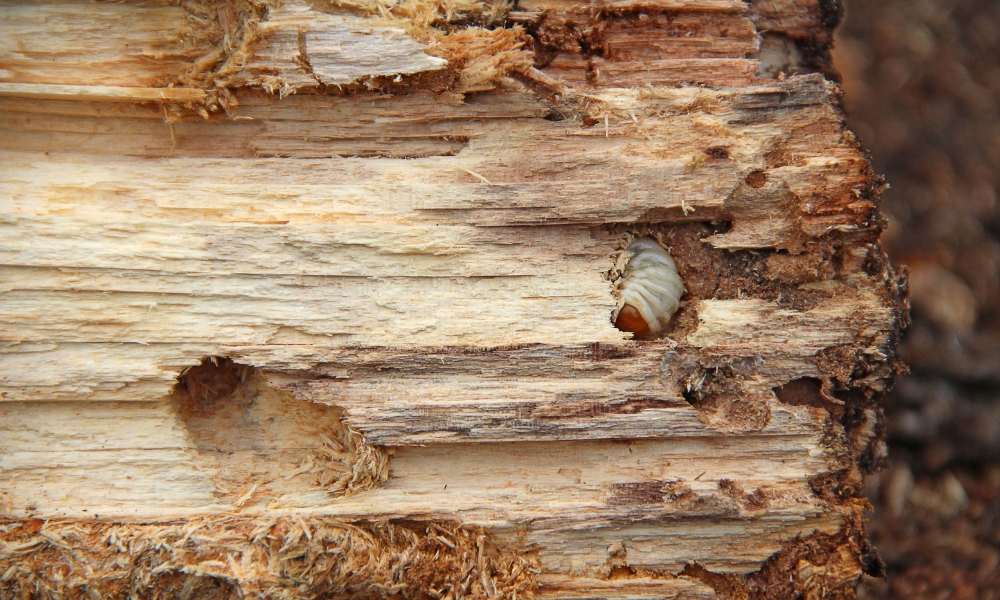
The beetle bores into the trunk and creates galleries beneath the bark, where it lays its eggs. Larvae hatch from these eggs and continue feeding within the living wood, disrupting the flow of sap between roots and crown.
In severe infestations, a young oak can effectively be girdled. The tree can no longer transport sufficient water and nutrients, making recovery increasingly difficult and, in some cases, leading to tree failure.
For this reason, the oak bark beetle is particularly risky during the first years after planting. At that stage, the tree’s energy is needed to develop new roots, absorb water, and adapt to its new location. Additional stress from beetle damage makes this process much more difficult.
Advice: Don’t Wait Until Damage Is Visible
The challenge is that by the time an infestation becomes clearly visible, it is often already too late.
That is why it is important to include young and vulnerable oaks in inspections and aftercare at an early stage, especially when the oak bark beetle becomes active. Not because every tree is at immediate risk, but because trees in the establishment phase are simply less resilient.
Good aftercare remains the foundation. This includes watering during dry periods, regular inspections, and ensuring that the growing environment continues to function properly. Additional trunk protection can help. It is not a replacement for aftercare, but a complementary measure to help the tree through this vulnerable period.
A Protective Layer the Beetle Dislikes
To protect the trunk during this vulnerable phase, ESK can be applied.
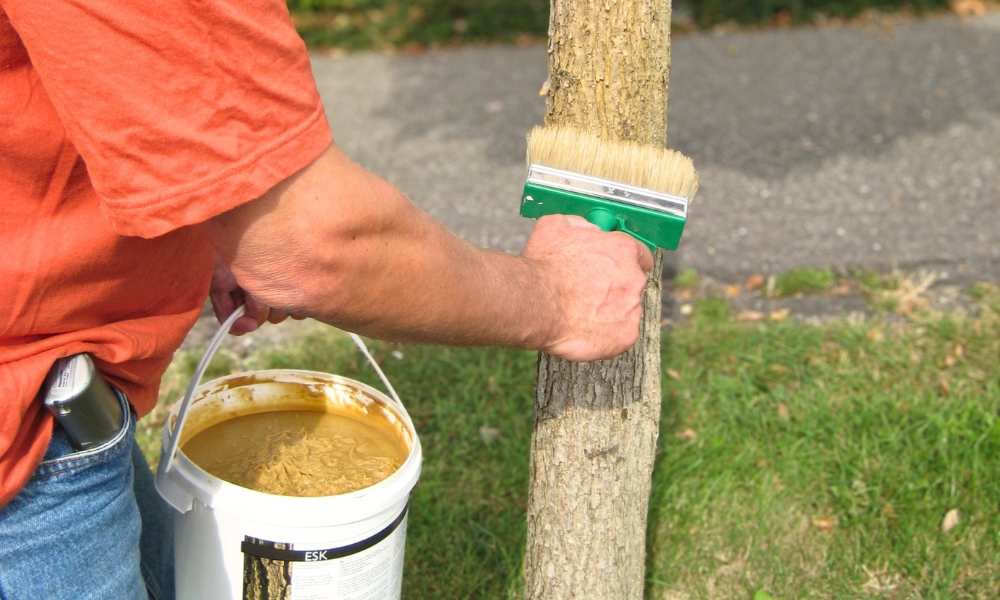
ESK is a natural, adhesive-like substance that is spread on the trunk and lower branches of the oak. Once dry, it forms a protective layer on the bark. This layer, combined with the scent of plant extracts, helps prevent the oak bark beetle from entering the tree. In this way, the tree is given more time and stability to get through the critical establishment period.
When Should You Apply ESK?
Timing is key.
ESK works best when applied before pressure from the oak bark beetle becomes too great. It is recommended to treat the trunk up to the main scaffold branch, typically at around 2.5 metres in height. Depending on weather conditions, ESK remains on the trunk for approximately 1.5 to 2 months. For arborists, this mainly means planning the treatment in time and including vulnerable oaks in regular maintenance rounds. For optimal protection, application is carried out around three times a year, ensuring better protection during the beetle’s active period.
Keep an Eye on the Weather
Weather conditions also play an important role.
ESK can withstand rain, but only once it has properly cured. In humid conditions, it dries more slowly. Heavy rain shortly after application can reduce adhesion.
Therefore, it is best to plan application during a dry period. On trees with rough bark, drying time may be longer, as a thicker layer is often required.
A Healthy Oak Starts with Proper Aftercare
ESK is not a miracle solution, but it can support young oaks during a vulnerable stage. The tree still needs water, space, and care. By temporarily protecting the trunk, the tree gains more time to recover and establish successfully.
Ultimately, that is what matters: not just planting a tree, but ensuring it has the opportunity to grow into a strong, healthy oak.
Advice on Aftercare
At GreenMax, we work on innovative solutions for growing environments, from the soil to the canopy. We build on years of expertise and insights from national and international practical experience. With a broad perspective, we are happy to support arborists and municipalities in the management and aftercare of public greenery. Together, we look for practical solutions that truly help trees thrive. Feel free to schedule a no-obligation consultation with us. We are happy to assist!
Request a consultationSummary
The oak bark beetle (Scolytus intricatus) poses a serious risk to young or weakened oaks, particularly during the first years after planting when trees are especially vulnerable due to stress, root recovery, and fluctuating weather conditions. The beetle creates galleries beneath the bark, disrupting sap flow and potentially causing severe damage or tree loss. Because infestations are often only noticed at a late stage, prevention is essential. Good aftercare, including watering and proper growing site management, forms the basis, supplemented by trunk protection with ESK. This natural coating creates both a physical and scent barrier, making it more difficult for the beetle to enter the tree. Timely application (several times per season and in dry conditions) helps young oaks better withstand the vulnerable establishment phase, allowing them to develop into healthy, resilient trees.
Last updated on: 29 June 2026
- Article expanded with current insights into the impact of the oak bark beetle on young and transplanted oaks.
- Additional explanation on how stress factors such as drought and root damage increase vulnerability to infestation.
- Clarification added on how the oak bark beetle operates beneath the bark and its impact on sap flow.
- Practical aftercare advice included, such as watering and monitoring the growing environment.
- Further explanation of ESK application and effectiveness, including timing and frequency.
- Recommendations added for optimal protection during the vulnerable establishment period.
Published on: 29 June 2026