




In conversation with Dr Jürgen Kutscheidt
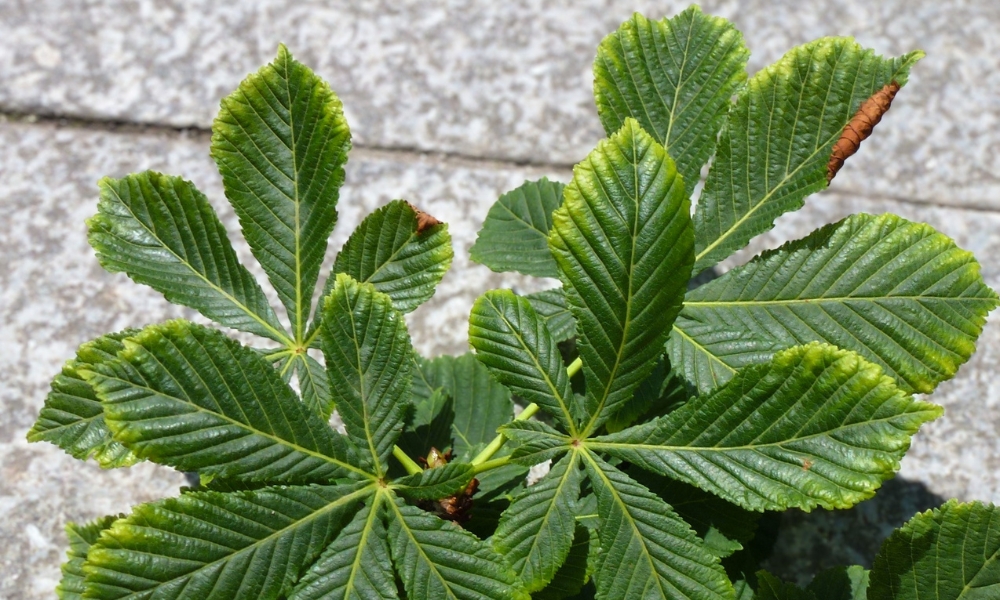
Trees are currently in full leaf everywhere. Temperatures are pleasant and the sun is showing its best side. Road salt is probably the last thing on your mind right now. Yet it is precisely during this period that de-icing salt can cause significant stress for trees. The salt spread on roads and pavements in winter remains in the soil and continues to have an effect for months. And the consequences? They often only become visible in summer. Trees struggle to absorb water, causing leaves to remain smaller, develop brown edges, discolour and eventually dry out. As a result, many trees appear weakened and show reduced growth.
Strengthening trees in challenging conditions
Dr Jürgen Kutscheidt is a German researcher and consultant specialising in mycorrhiza and soil improvement. Since the 1980s, he has been studying and applying mycorrhizal fungi to strengthen trees in difficult growing conditions. Through his work in arboriculture, he focuses on maintaining and improving tree vitality, with mycorrhiza playing a key role. From this expertise, we asked him several questions about how mycorrhiza can help trees affected by salt stress caused by de-icing salt.
Mycorrhiza for a stronger root system
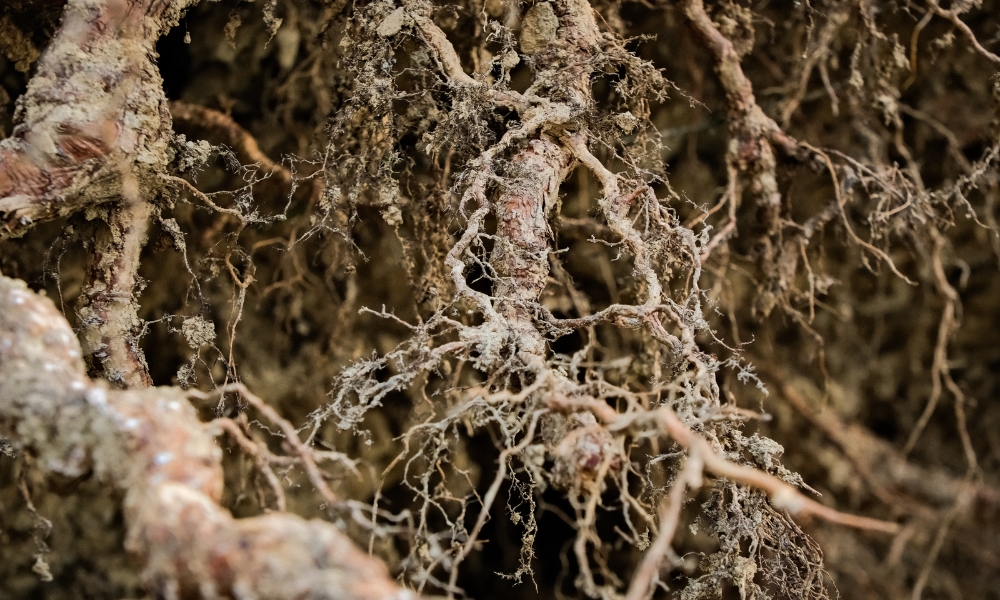
Mycorrhiza are beneficial soil fungi that live in symbiosis with tree roots. They extend the reach of roots, allowing trees to absorb water and nutrients more efficiently. This is particularly valuable under salt stress. Trees gain better access to what they need and can recover more effectively from adverse conditions. Dr Kutscheidt explains: “In principle, exposure to de-icing salt leads to the displacement of nutrients such as potassium, calcium and magnesium. These are then leached out, potentially causing nutrient deficiencies. In addition, the osmotic potential of the soil solution increases, making water uptake by the roots more difficult. The tree experiences drought stress and nutrient deficiency. This is where mycorrhiza come into play, supplying additional water and nutrients to the plant. We currently often use mycorrhiza inoculants suitable for high pH levels, as salt exposure can increase soil pH. In some cases, we combine this with specific mycorrhiza that better suit particular tree species, such as oak.”
Excellent results in Düsseldorf
At heavily salt-affected sites, Dr Kutscheidt observed that trees can visibly recover within a relatively short time. Typical brown leaf edges (leaf margin necrosis) were significantly reduced or even disappeared completely. “We have recently been selecting fungal strains from salt-affected sites. In cases of high salt stress, we currently combine humic substances with potassium fertilisation and species-specific mycorrhiza. Adequate watering during the growing season is also essential,” explains Dr Kutscheidt. “With this approach, we have already seen excellent results in Düsseldorf. On Königsallee, sodium and chloride levels in the leaves decreased so much within one year that leaf margin necrosis disappeared completely. At another location, levels were even higher, yet we still observed clear improvement. In practice, this method consistently delivers very good results.”
Advice from Dr Kutscheidt for arborists
At GreenMax, we see every day how important a proper soil strategy and aftercare are, especially in locations with stress factors such as de-icing salt. Although a good underground growing environment forms the foundation of above-ground tree health, care does not end after planting. Dr Kutscheidt advises: “At present, I recommend arborists use mycorrhiza in combination with humic substances. These soil improvers complement and reinforce each other well. Soil analysis is useful, but leaf analysis gives a better picture of actual sodium and chloride levels. Leaf samples should be taken from the outer crown and only up to mid-July. If possible, we incorporate Perlhumus into the topsoil layer or inject finely ground Perlhumus into the soil. Additionally, we apply Powhumus through irrigation. Until tested mycorrhiza inoculants specifically for ‘salt sites’ are available, I recommend using inoculants suitable for high pH levels.”
A well-considered approach to the entire tree pit
Salt stress remains a challenging issue for urban trees, but much can be achieved with the right approach. Mycorrhiza can play an important role, particularly when combined with a comprehensive soil improvement strategy and proper aftercare. At GreenMax, we develop innovative solutions for tree pits, from soil to canopy. Drawing on years of expertise and international practical experience, we support arborists and municipalities dealing with salt stress and mycorrhiza-related challenges. Together, we work towards practical solutions that genuinely benefit trees.
Request a consultationSummary
Mycorrhiza provide an effective solution to support trees under salt stress caused by de-icing salt. Salt accumulates in the soil for months, hindering water and nutrient uptake. According to Dr Jürgen Kutscheidt, mycorrhizal fungi strengthen the root system, enabling trees to absorb water and essential nutrients such as potassium, calcium and magnesium more efficiently. Combined with humic substances and targeted fertilisation, this can lead to visible recovery, including reduced leaf margin necrosis and improved vitality. Case studies from Düsseldorf demonstrate that this approach significantly reduces the negative effects of sodium and chloride. For arborists, an integrated soil strategy—including mycorrhiza inoculants for high pH soils, leaf analysis and adequate watering—is essential for sustainably protecting trees from salt damage.
Last updated on: 29 June 2026
- Article supplemented with up-to-date insights into the impact of salt stress on trees.
- Explanation expanded with practical experiences from researcher Dr Jürgen Kutscheidt.
- Clarification added on how de-icing salt affects water and nutrient uptake.
- Practical recommendations included for soil improvement using mycorrhiza and humic substances.
- Guidance added for application under elevated pH levels caused by salt exposure.
Published on: 29 June 2026